Our Work · Custom Engraved
Purpleheart, Ash & Zebrawood Turtle Inlay Dining Table
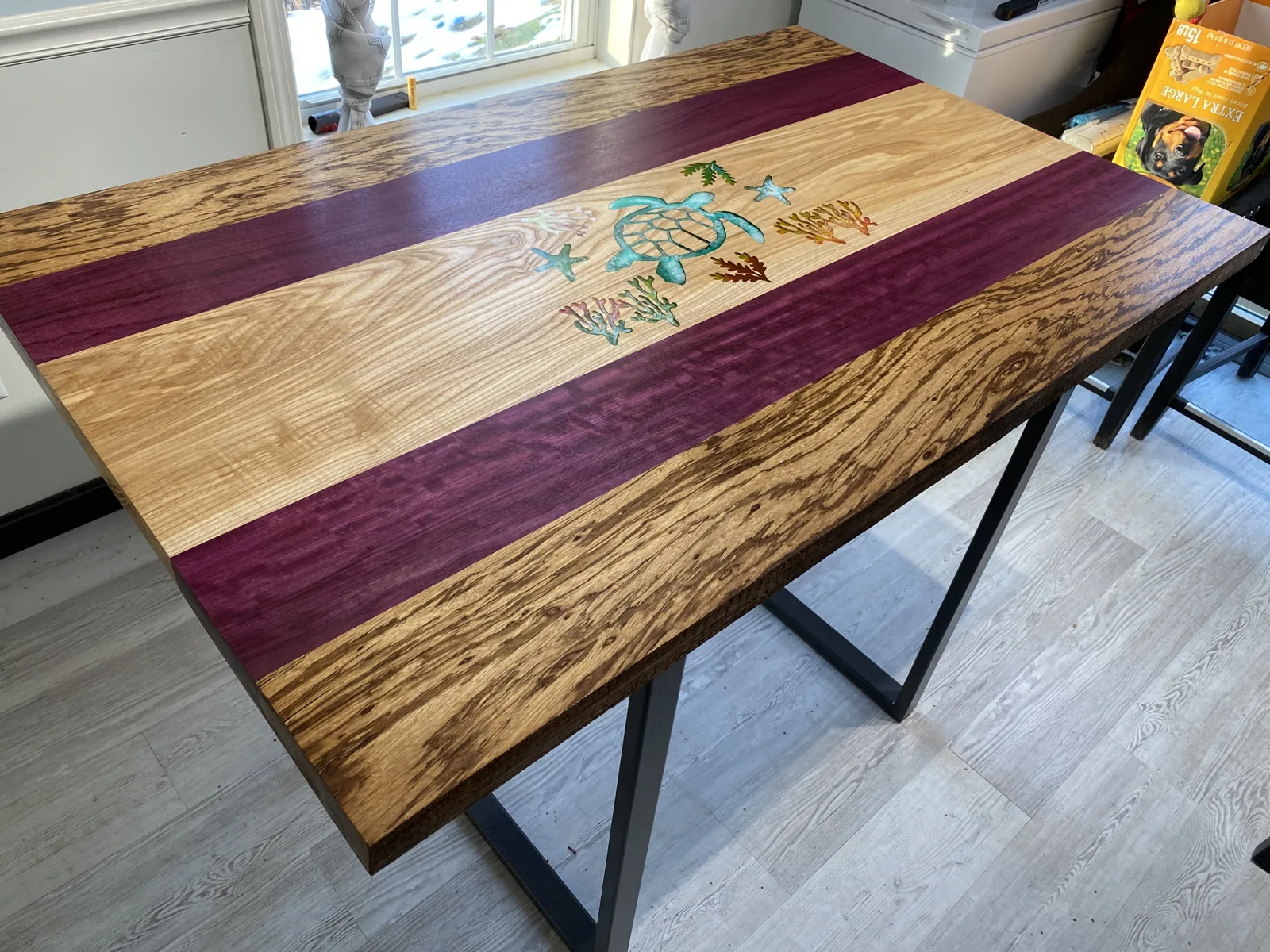
A dining table built around a hand-cut turtle inlay, with an ash center framed by purpleheart and zebrawood and a hand-rubbed tung oil finish meant to be felt, not just seen.
How It Was Made
From a stack of boards to the table in the room.
Notes from the bench, in Dan's own words.
Choosing the wood
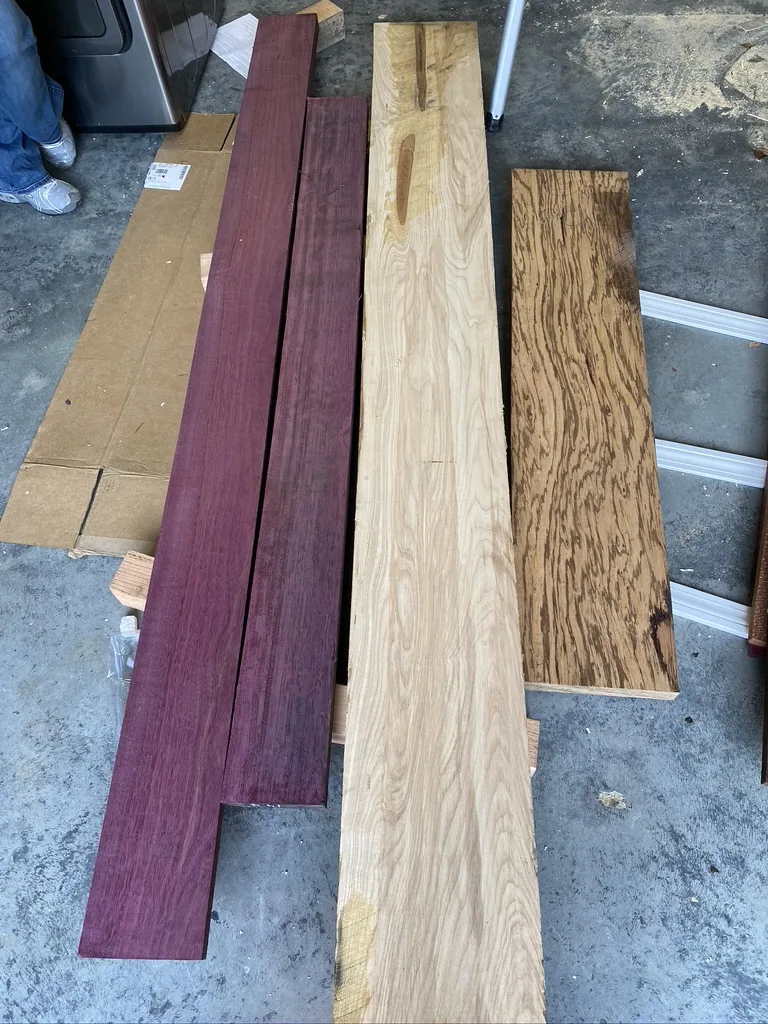
I started by heading down to the Woodcraft store and picking out wood that I thought would look really nice together: a nice piece of ash for the center, and purpleheart and zebrawood for the outer edges. I wanted something symmetrical but visually interesting, where the focus is on the natural colors and grain of the wood itself rather than any stain or coloring.
Milling and glue-up
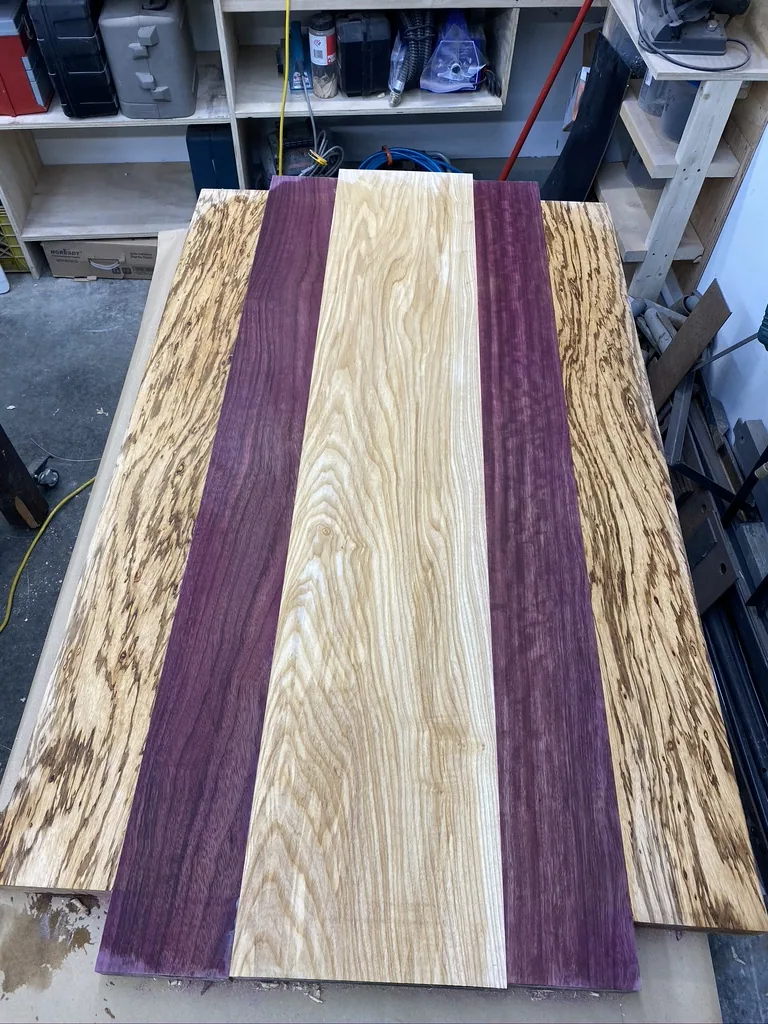
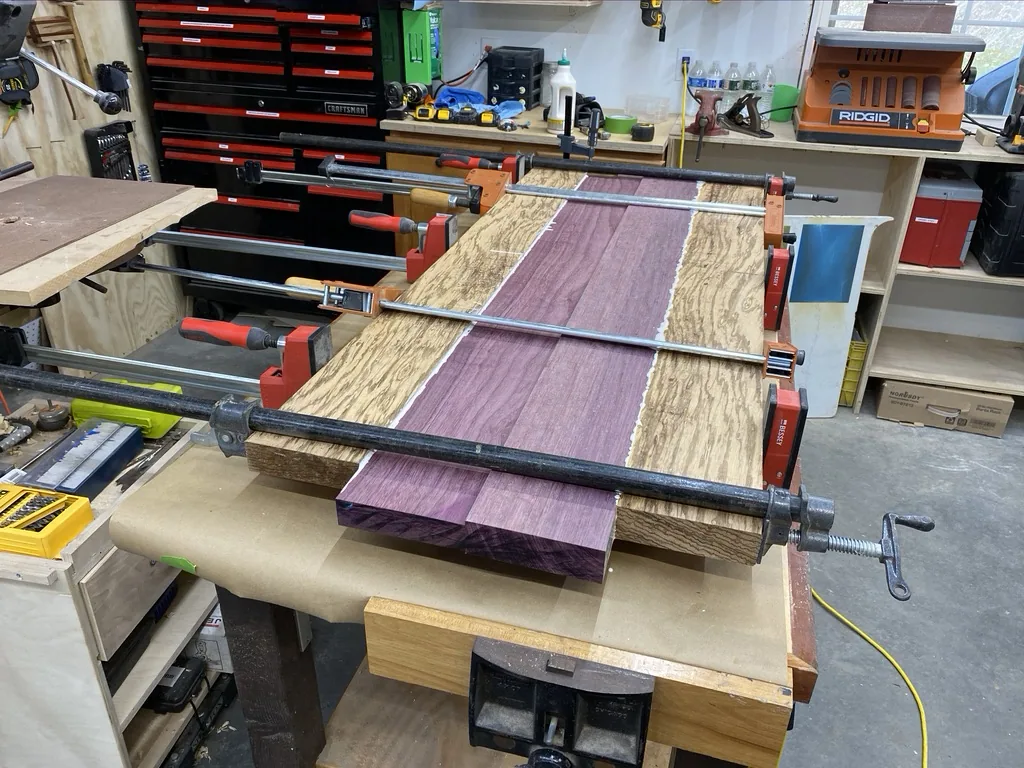
I milled the boards flat, straight, and square, then glued up the edges first to get them flat and level. From there I glued the two sides onto the center board and spent a good amount of time flattening and leveling until the top was smooth and dead flat.
Designing the inlay
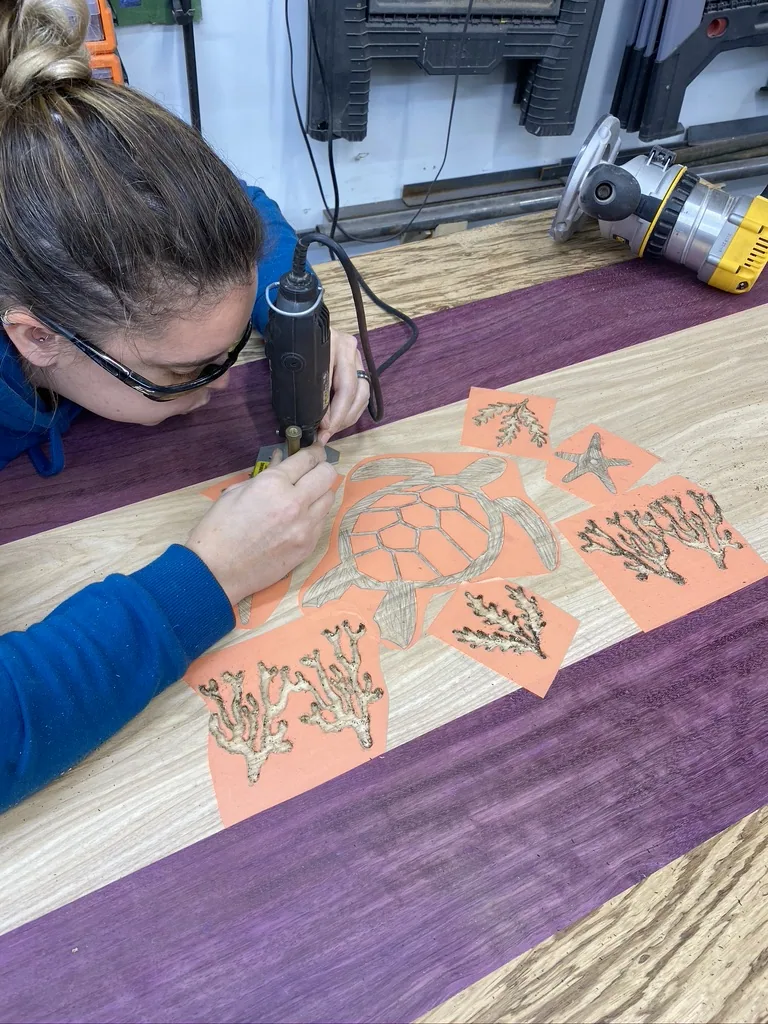
This was before we had the CNC, so the design was done by hand. My wife got out her Cricut and cut stencils for the turtle, the seaweed, and the ferns, and we laid those onto the top to map everything out.
Carving and the epoxy inlay
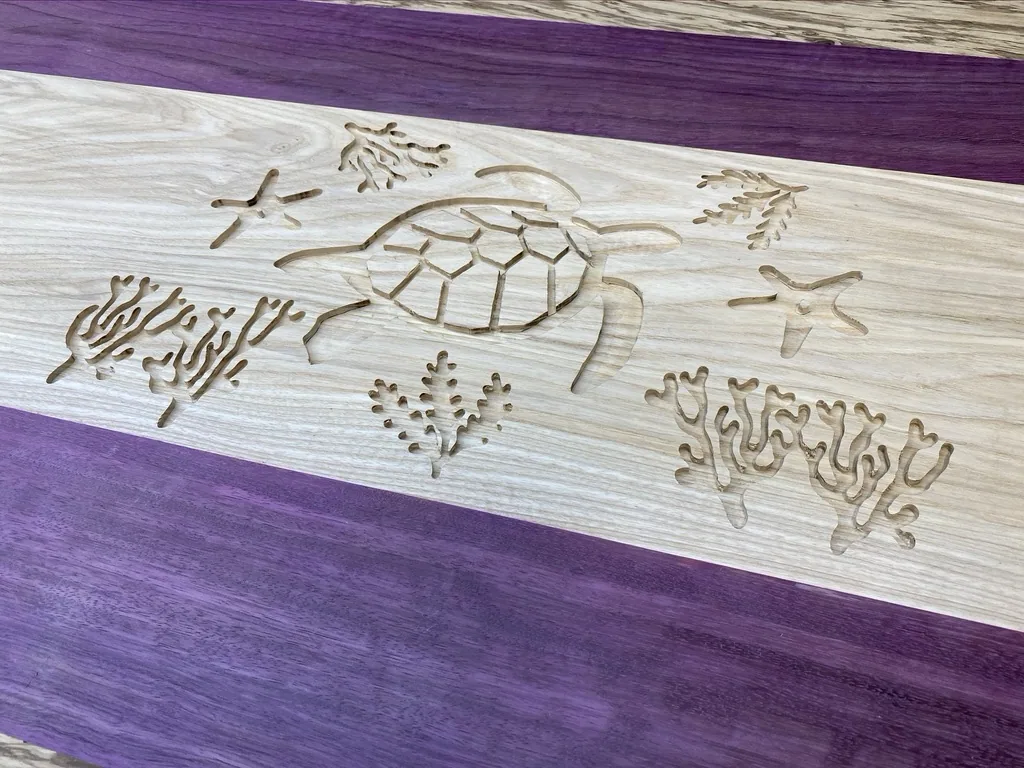
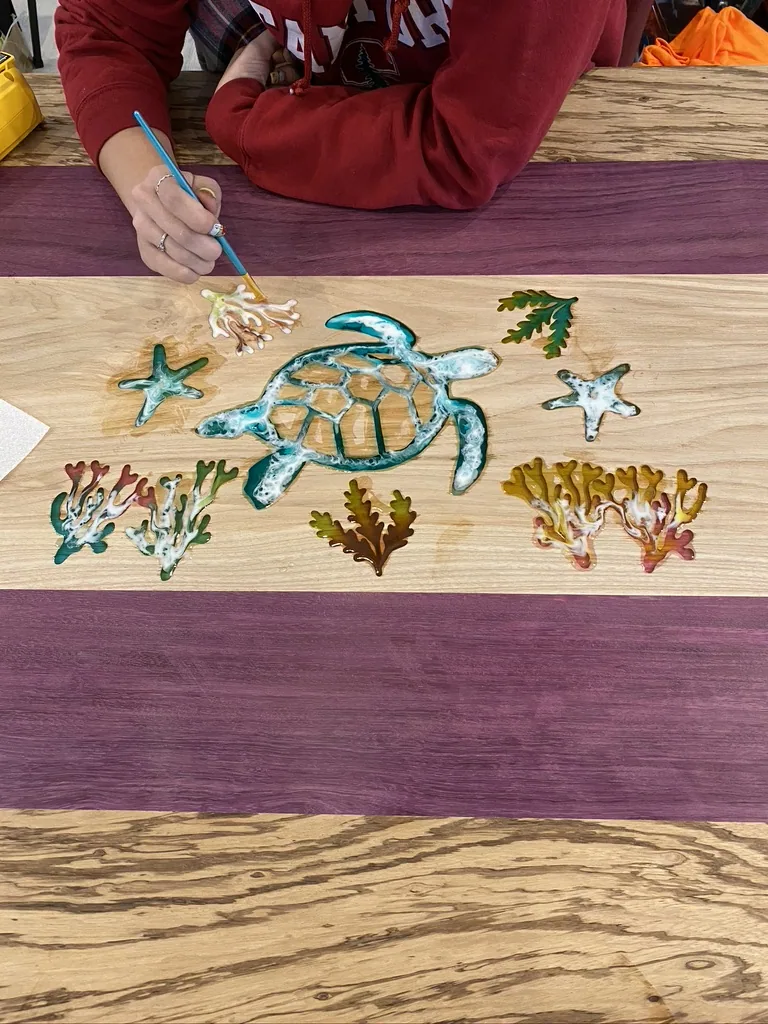
With a router and a Dremel, I carved about three-eighths of an inch deep into the ash to make the pocket for the turtle, seaweed, and ferns. Then we filled it with colored epoxy, working in swirls and different tones to bring the design to life, and sanded it all flush. That was the top basically done.
Welding the steel base
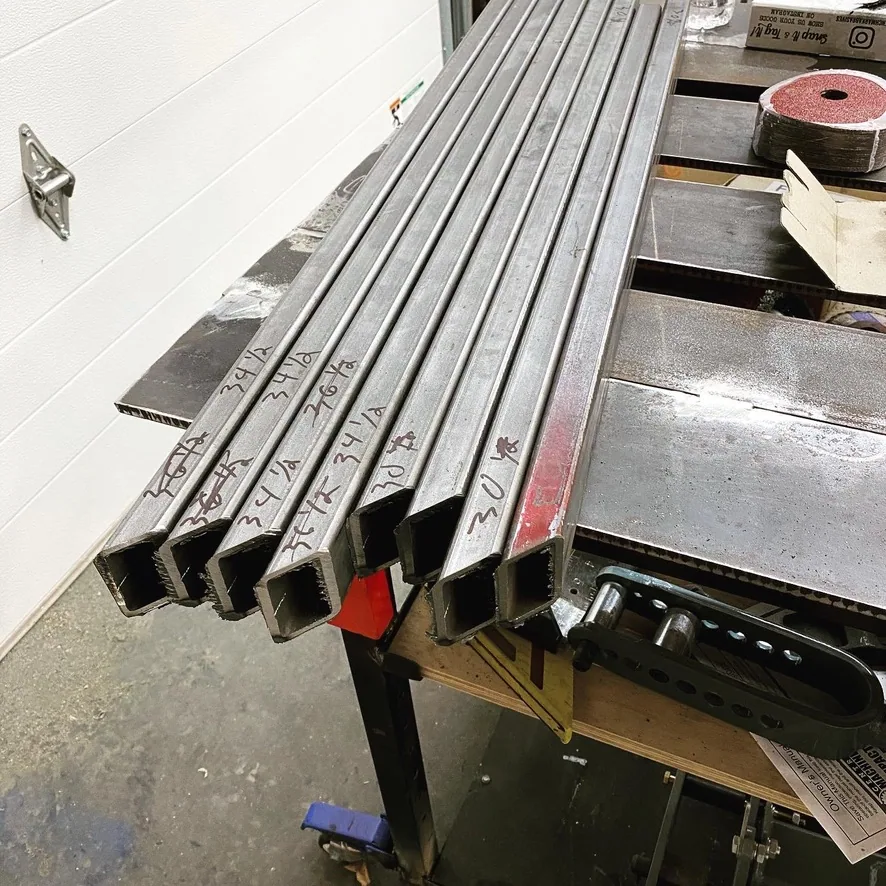
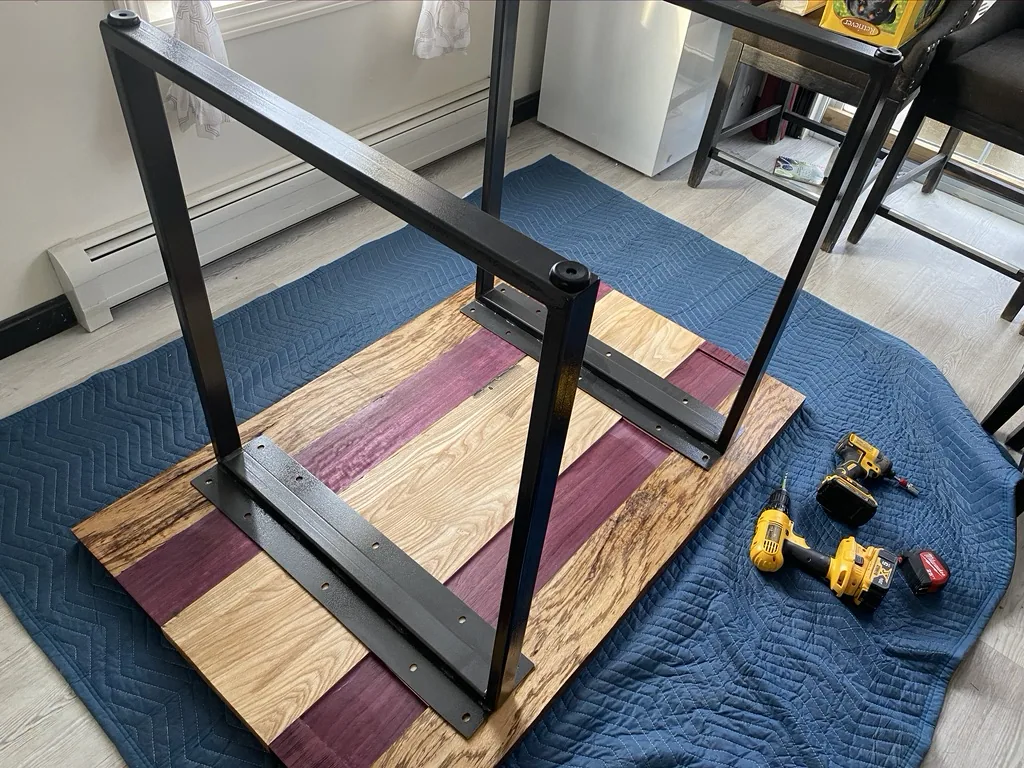
For the base I went to Mill Metals in Manchester and grabbed some one-by-two square tube. This isn't the thin-wall stuff off a cheap online table; it's basically structural steel with an eighth-inch wall, very heavy duty. I cut and welded it into the legs, ground the welds, and hit it with Rust-Oleum's Hammered finish to give it a raw, wrought-iron look. I like blending metal legs with wood that way; it reads more rustic than a plain flat black.
The tung oil finish
The top got several coats of Formby's tung oil. I like oil finishes because they're easily repairable and they don't scratch the way a film finish does; the oil soaks in and protects the wood, so a scratch just sands out and touches up with more oil. It keeps the natural look and feel, so you're still feeling wood, not a plastic film over it. On a tabletop, that earthy, made-of-wood feel is exactly what I wanted.
I build every piece to last for generations, with the same attention to the wood, the joinery, and the finish that went into this one. If you have something in mind for your own home, I would love to talk it through.
Inquire about a similar pieceBegin a Project
Considering a piece of work for your home?
We take on a limited number of projects each year. Reach out with what you have in mind and we will be in touch to discuss the space, the materials, and the timing.